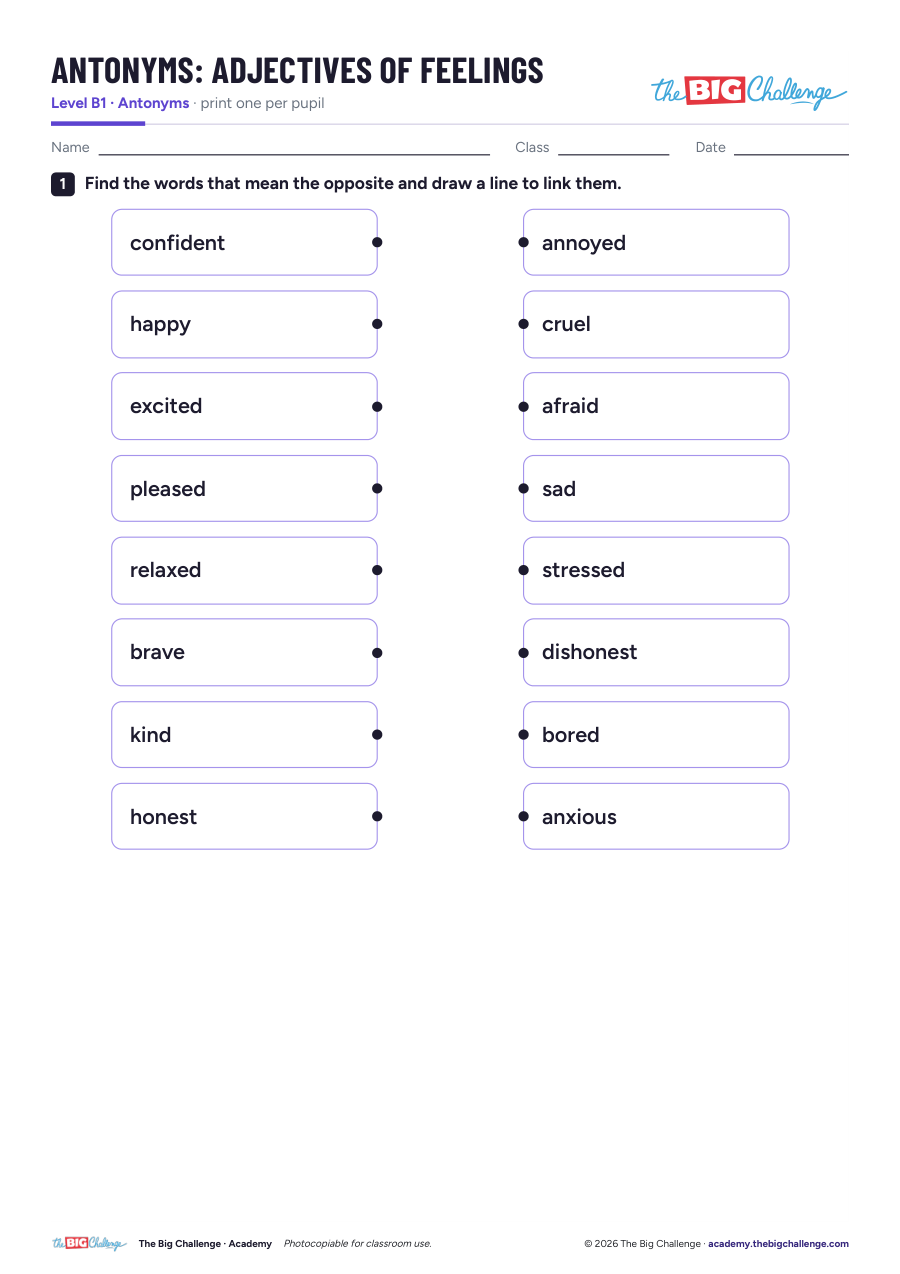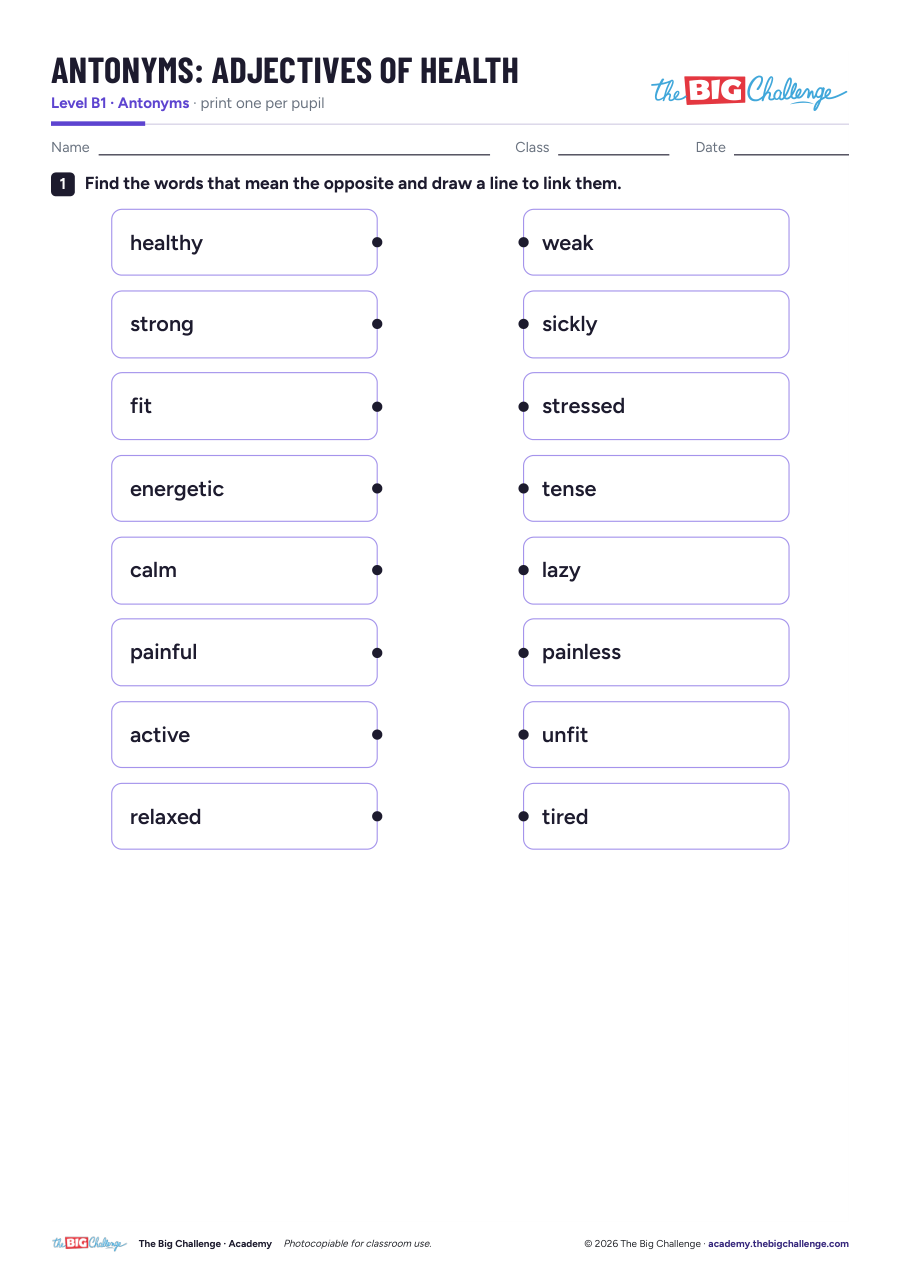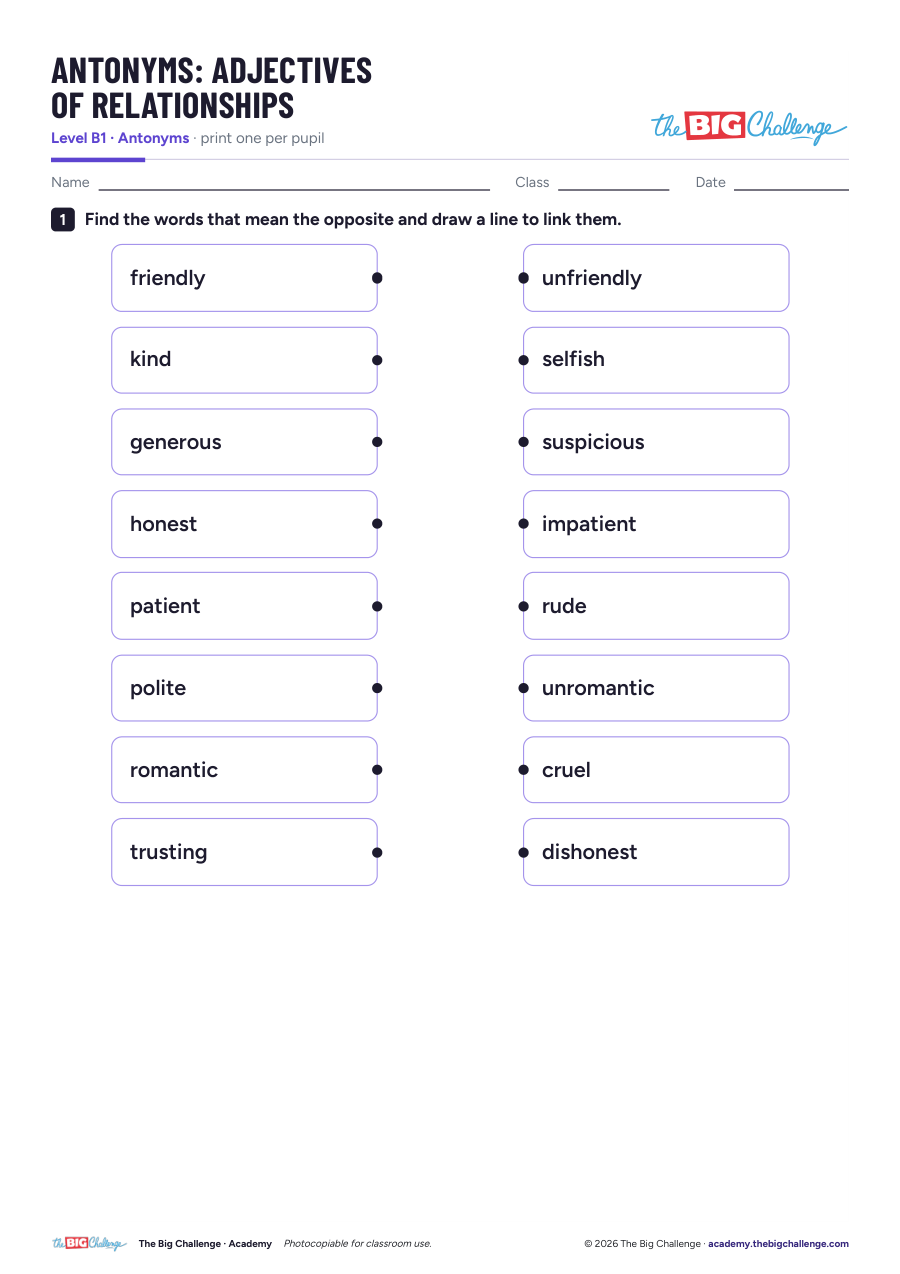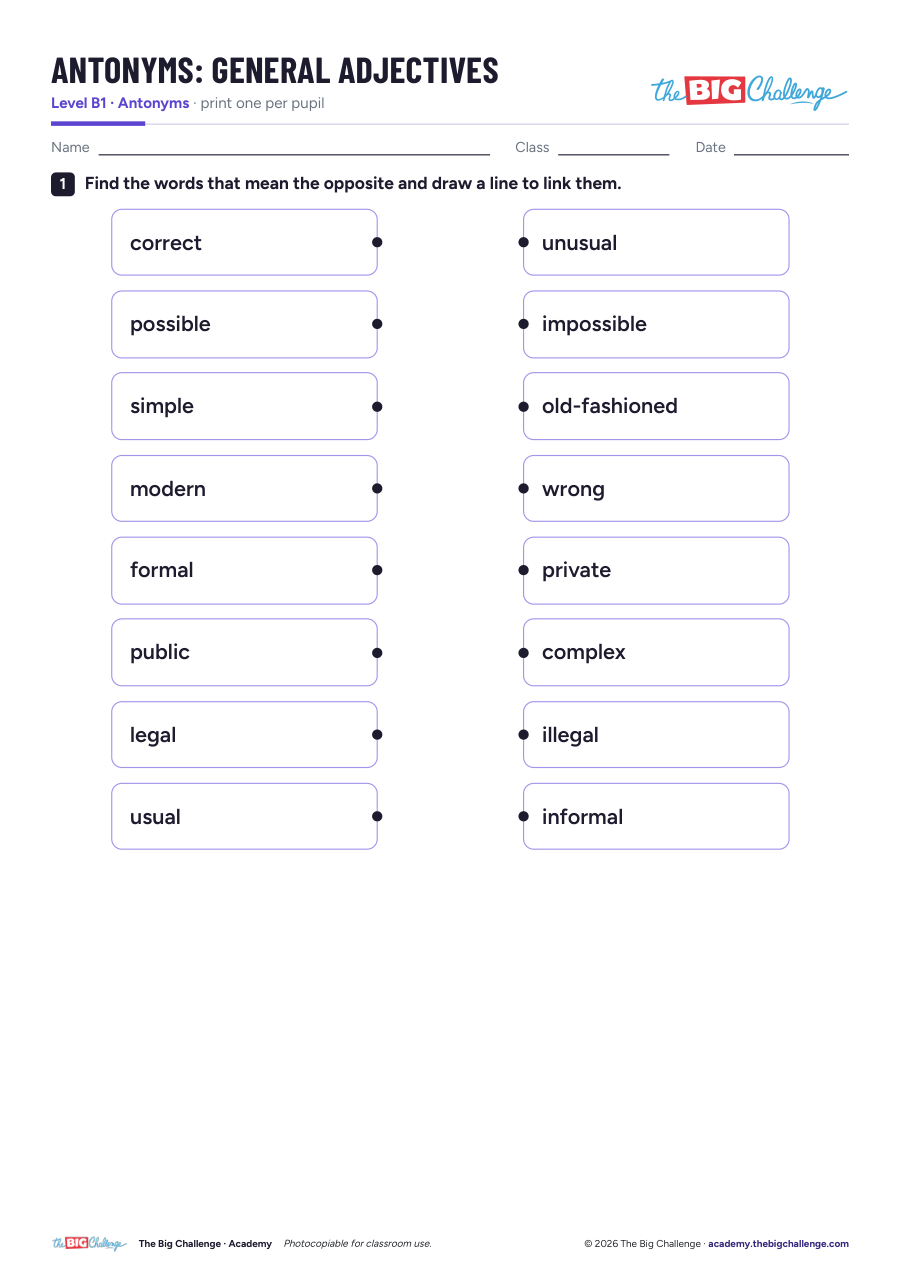
Adjectives of Nature and Environment
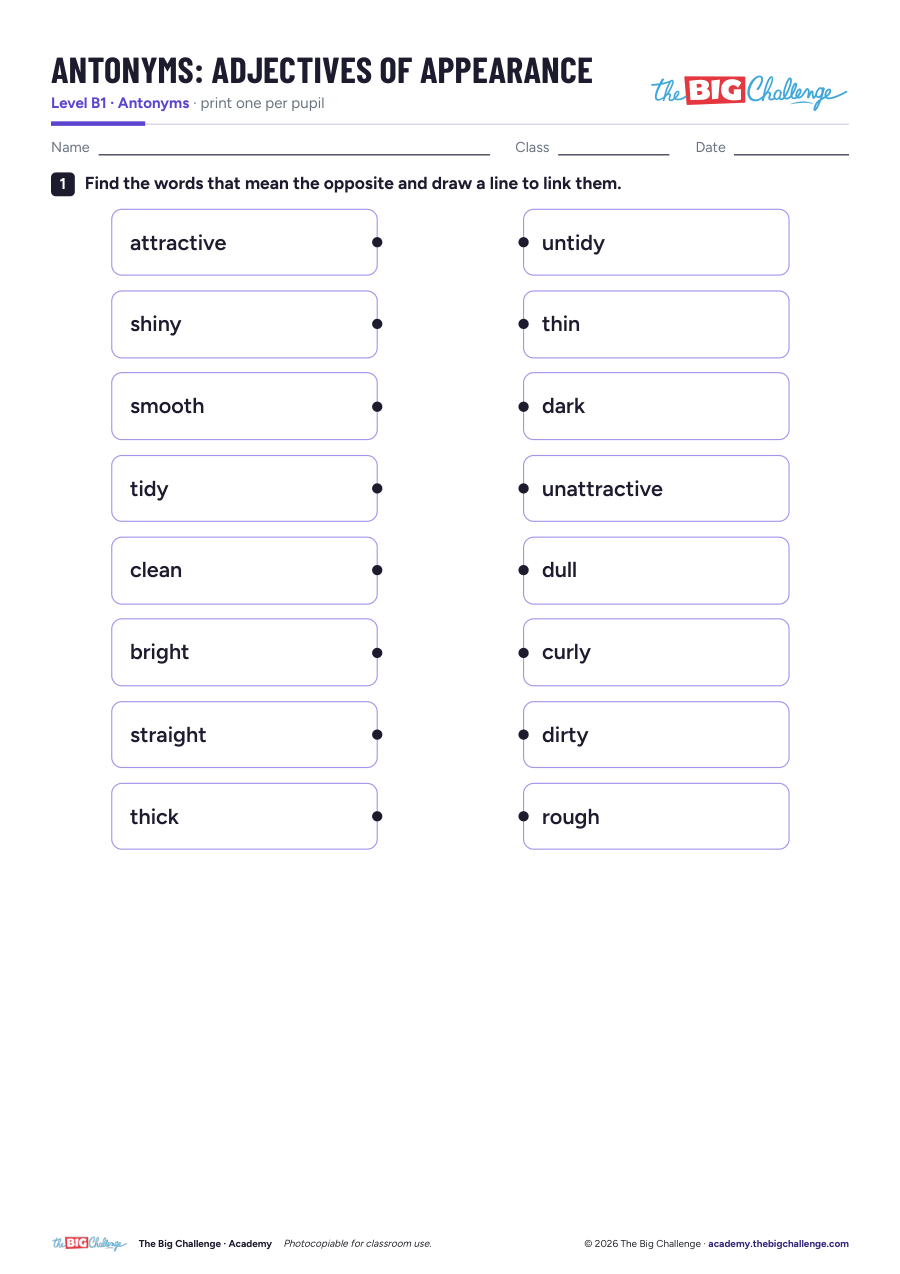
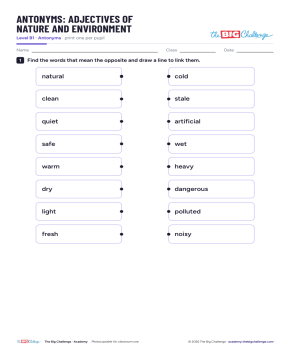
Conteúdo ExclusivoA printable B1 pairing worksheet on adjectives of nature and the environment: 8 words in each of two columns, to be joined to the word that means the opposite. Recognition practice that works both on the day the words are introduced and as later revision, in about 25 minutes.
Sua folha de exercícios
Avalie o conhecimento dos seus alunos com esta folha de exercícios pronta para usar, projetada para reforçar pontos gramaticais e de vocabulário.
Este recurso está disponível gratuitamente. Basta criar uma conta ou fazer login para acessá-lo imediatamente.
Guia Pedagógico
Resource Objective & Content
The objective is to consolidate and expand students' vocabulary for describing nature and environmental conditions by identifying and associating antonym adjectives (opposites).
The document is an exercise titled "Antonyms Game" on the theme "Adjectives of Nature and Environment". Students must connect eight pairs of words with opposite meanings. The vocabulary covers ecological concepts (natural/artificial, clean/polluted), safety (safe/dangerous), physical conditions (warm/cold, dry/wet, light/heavy), and states (quiet/noisy, fresh/stale). This lexicon is essential for describing and comparing places or discussing the impact of human activity.
Suggested Procedure
Before the activity (~5 min): TWO WORLDS COLLIDE
-
Write two opposing concepts on the board (e.g., "A beautiful forest" vs "A polluted city"). Ask students to provide adjectives to describe each concept to naturally elicit vocabulary of opposites.
During the activity (~5-10 min): FINDING THE OPPOSITES
-
Distribute the worksheet. Emphasize the instruction: find the opposite (the opposite).
-
Allow students, individually or in pairs, to connect the antonym pairs.
-
Lead a collective correction using images to illustrate the pairs (e.g., a photo of a clean river/clean and one of a polluted river/polluted).
After the activity (~10 min): DESCRIBING THE TWO IMAGES
-
Show two highly contrasting photos (e.g., a calm natural landscape and a noisy industrial area).
-
Students must use at least three pairs of antonyms from the worksheet to compare the two scenes. For example: "The first picture is quiet and safe, but the second picture is noisy and dangerous.".
Adaptations
-
To simplify: Before the exercise, mime or show images for each word on the list to ensure all vocabulary is understood.
-
To extend: Ask students to write a short paragraph about an environmental problem (city noise, air pollution) using several pairs of antonyms to explain the situation and the desired solution.