General Adjectives
Exclusive Content
Academy Access
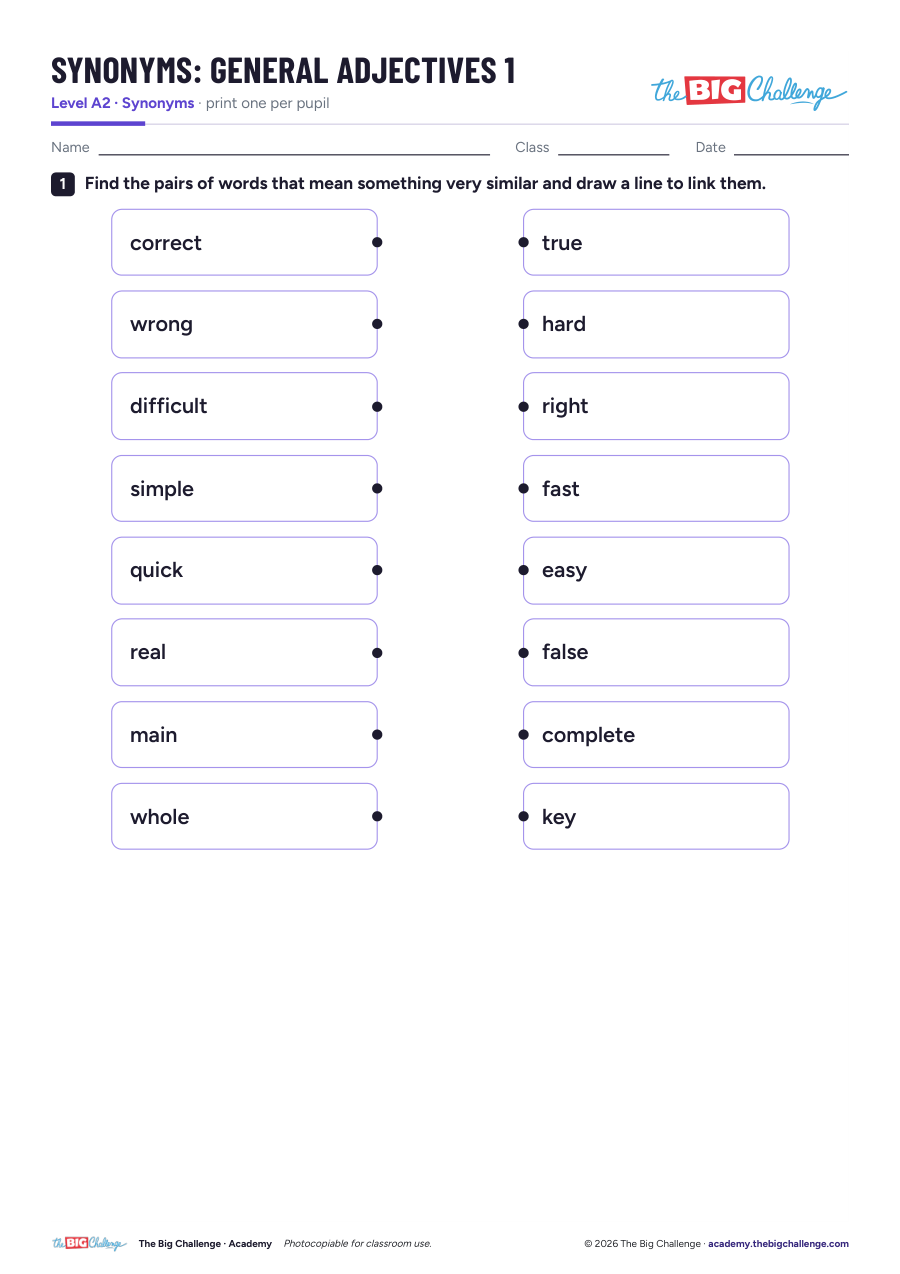
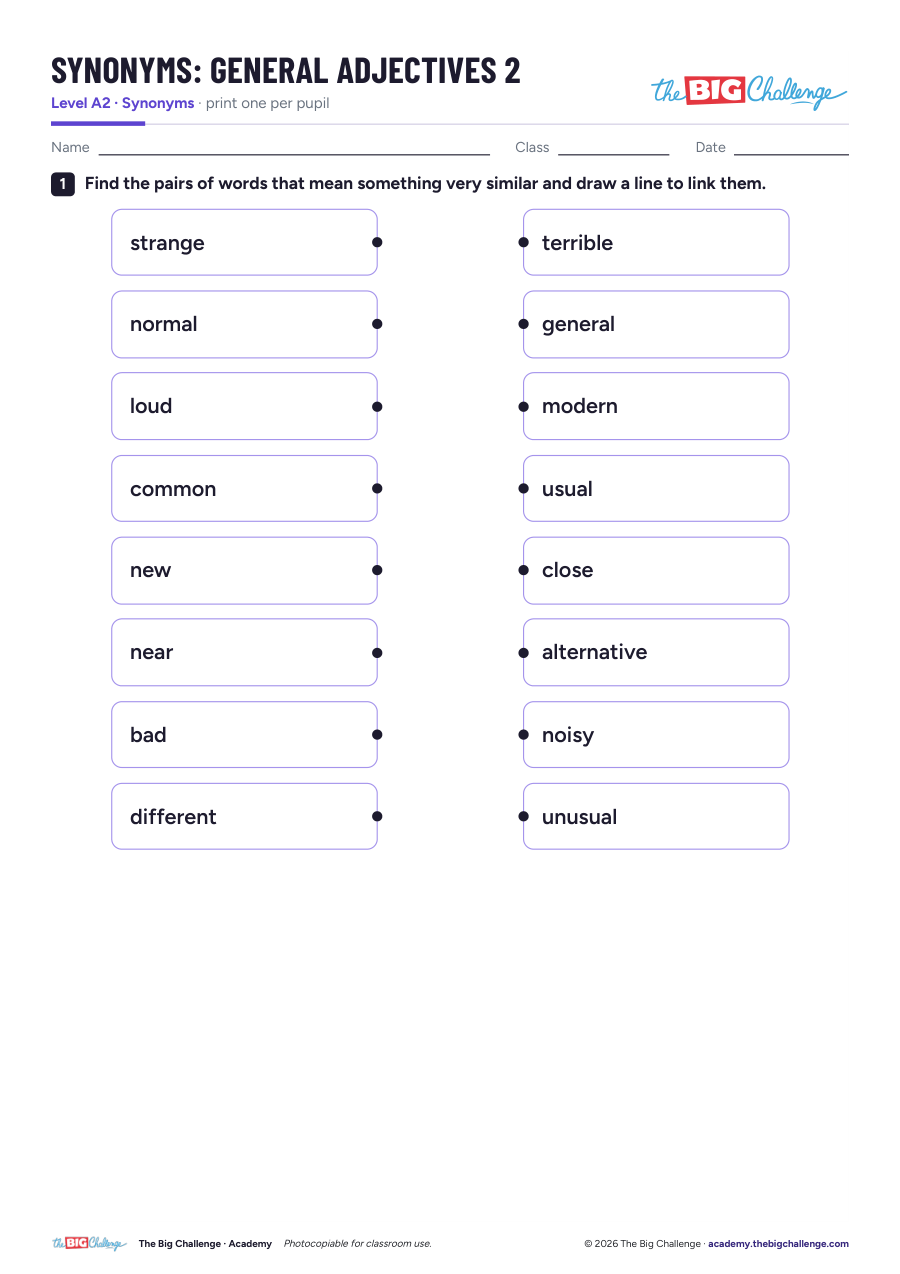
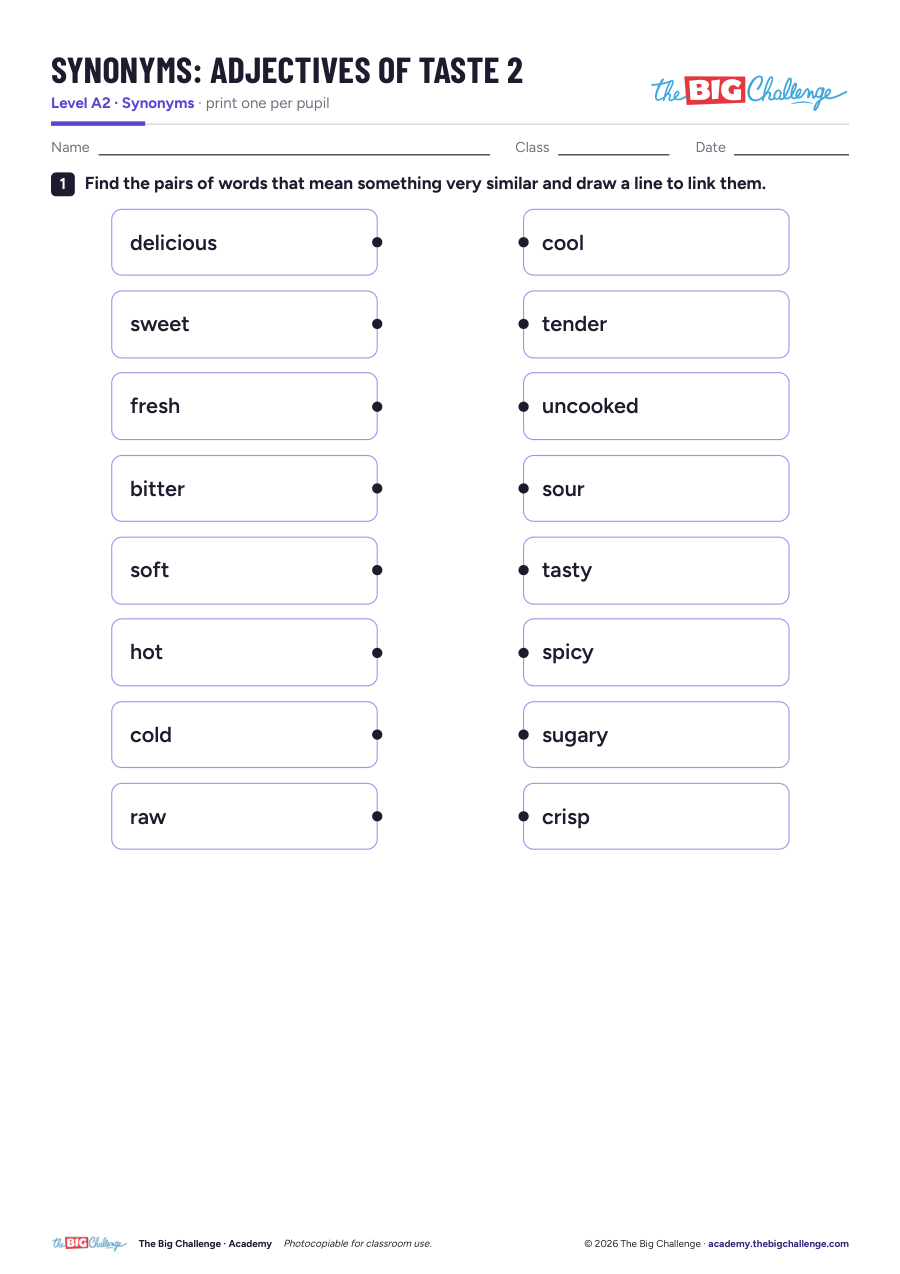
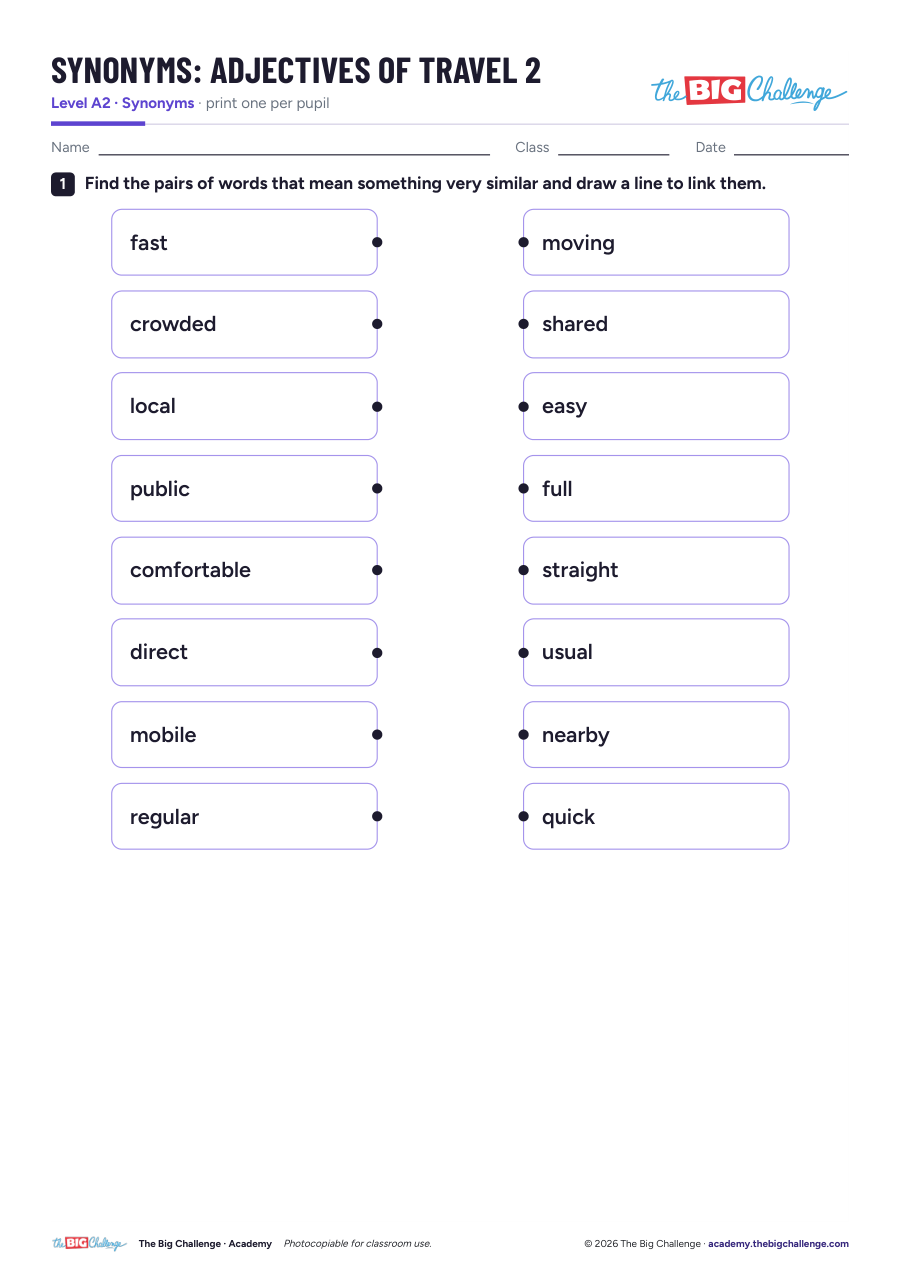
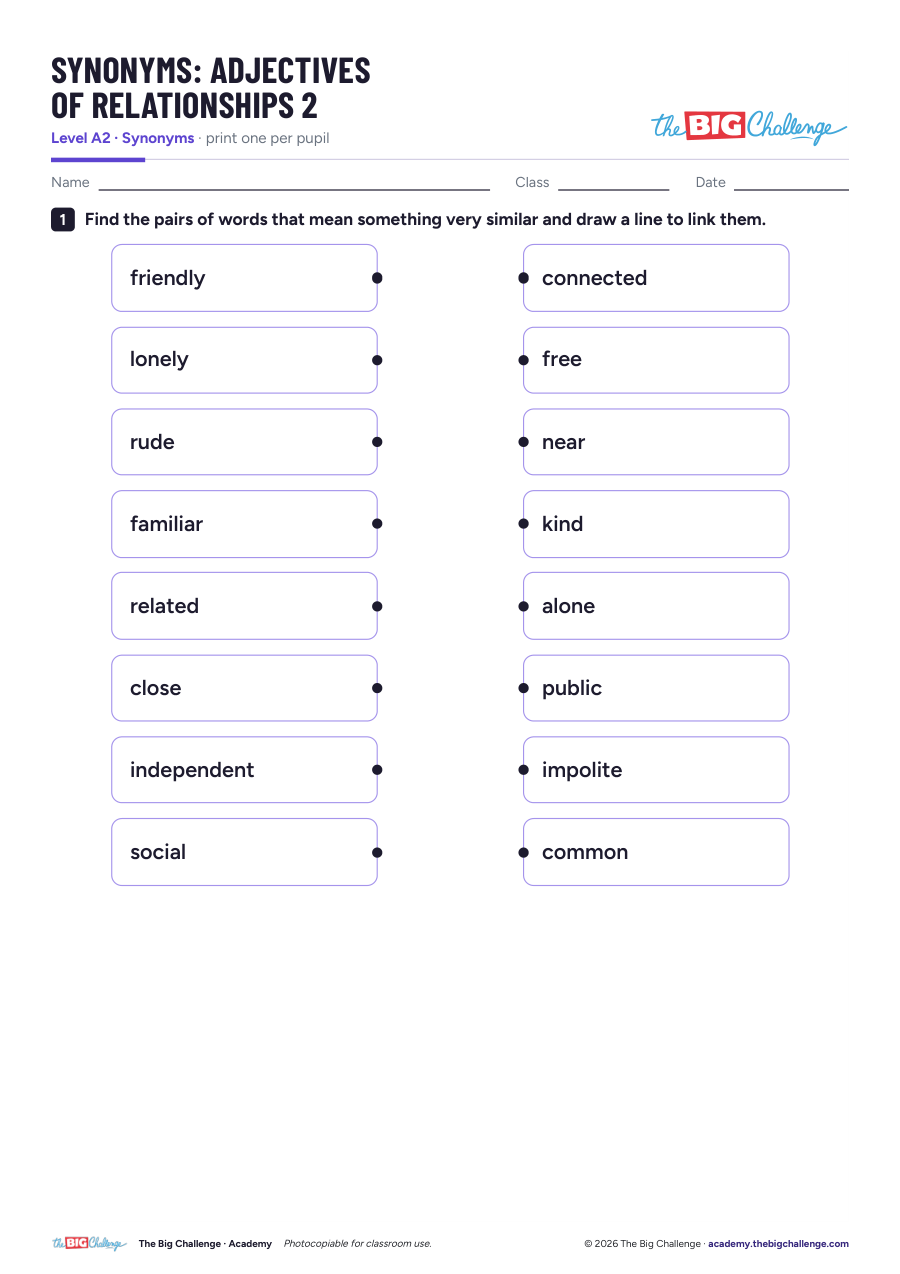
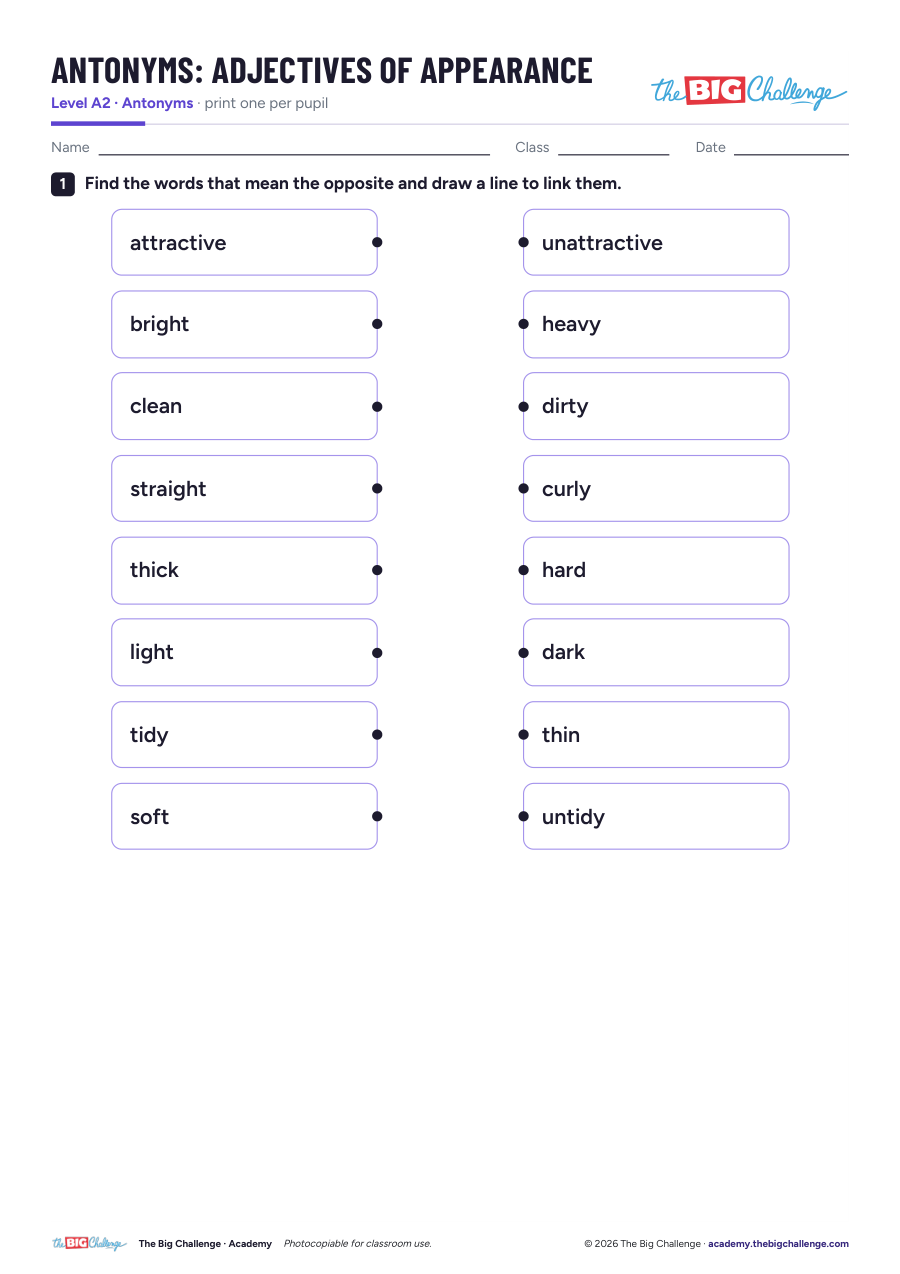
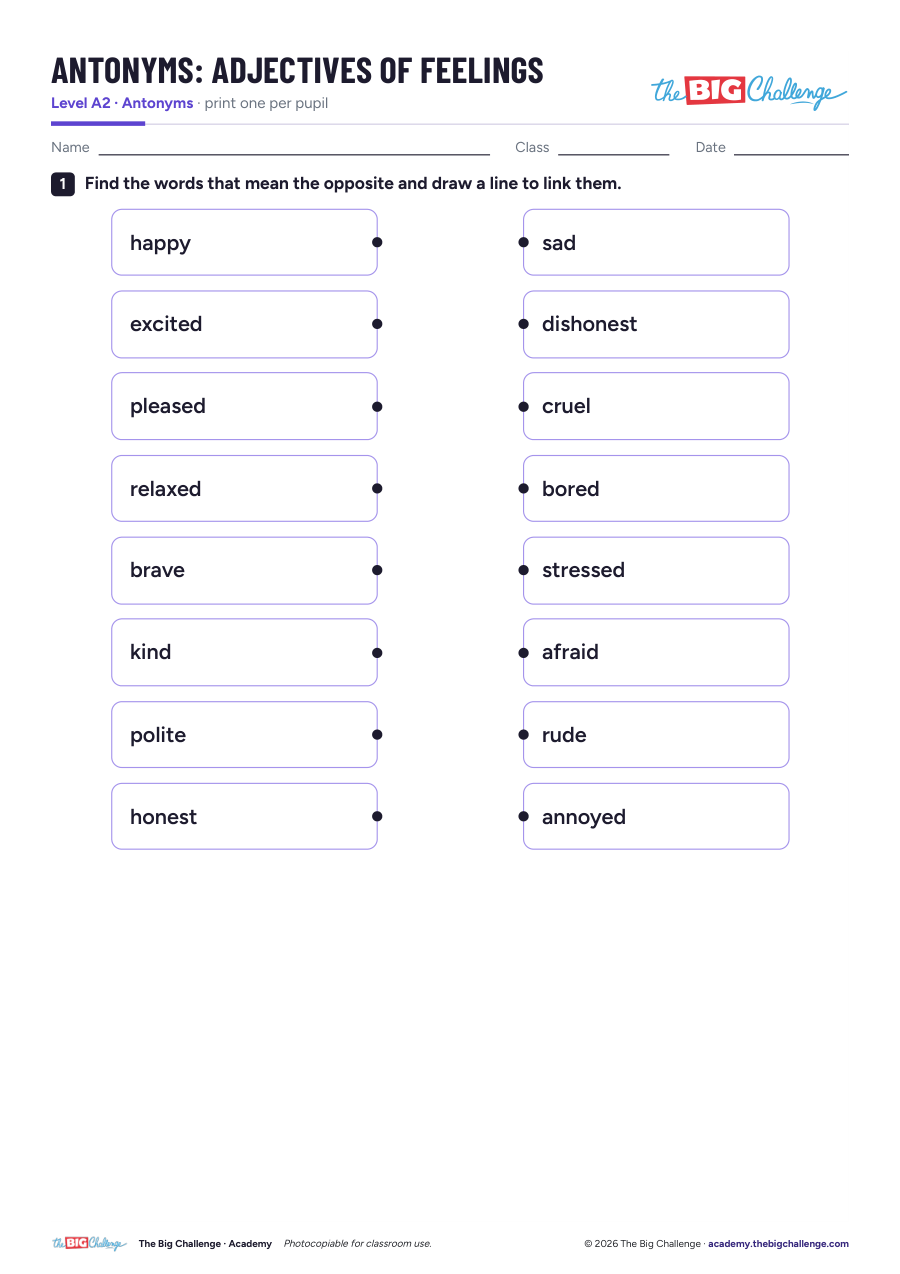
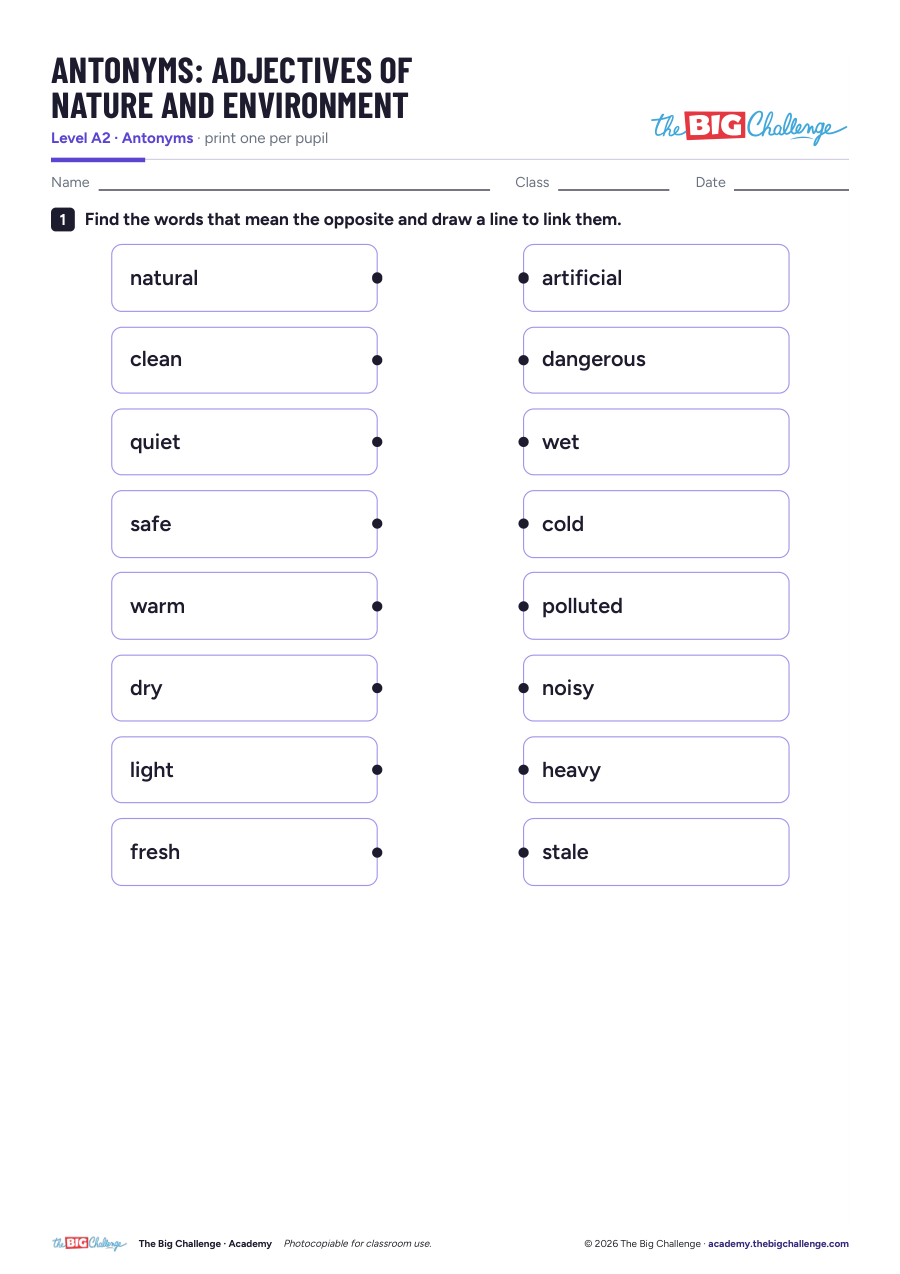
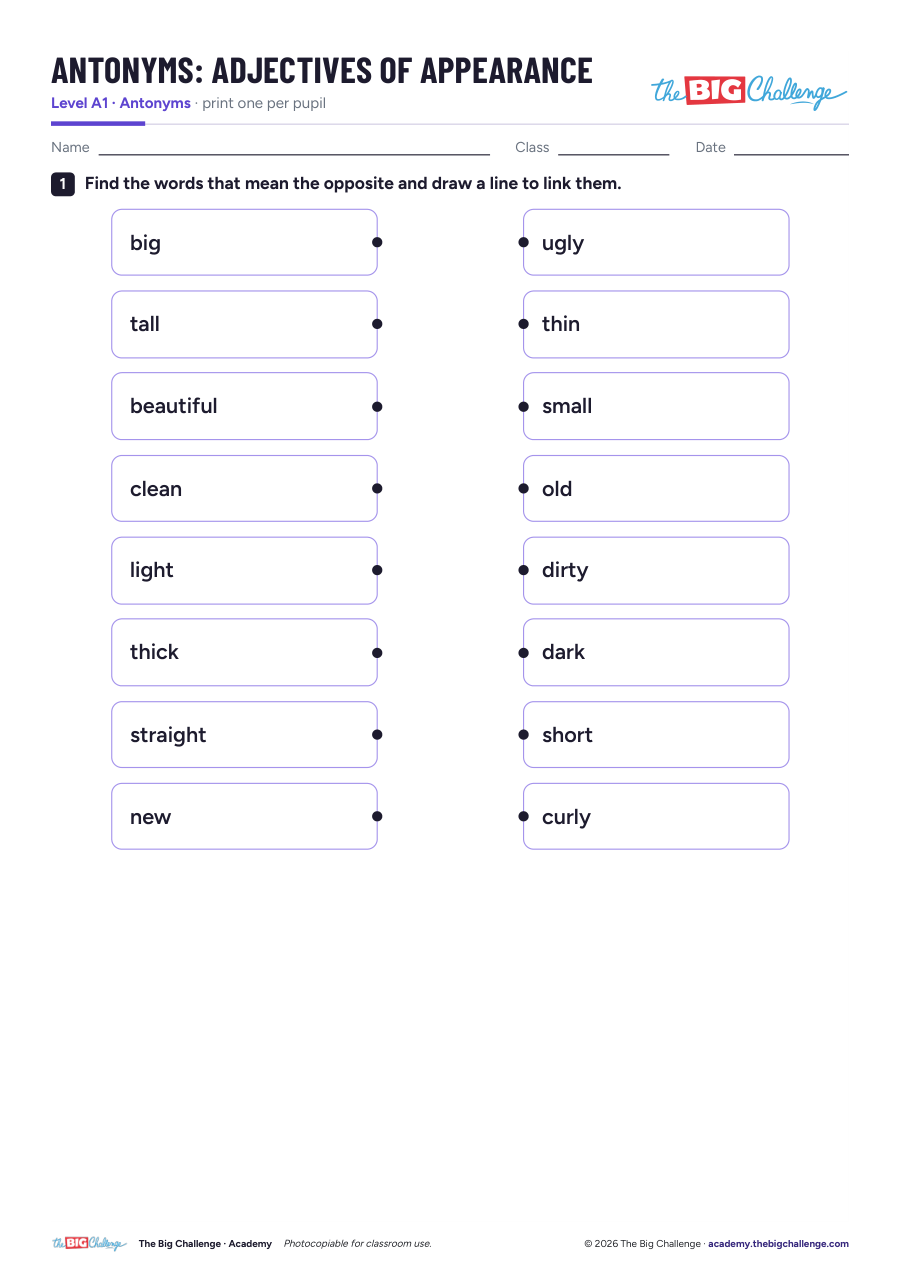
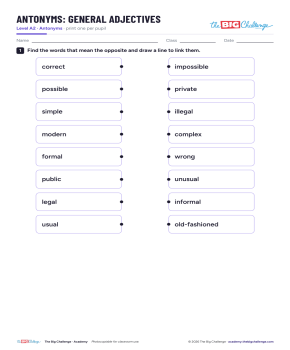
A printable A2 pairing worksheet on common all-purpose adjectives: 8 words in each of two columns, to be joined to the word that means the opposite. Recognition practice that works both on the day the words are introduced and as later revision, in about 25 minutes.
Your Worksheet
Assess your students' knowledge with this ready-to-use worksheet, designed to reinforce grammar and vocabulary points.
Premium Resource. This tool is part of The Big Challenge Academy. Subscribe for unlimited access to hundreds of premium resources.
Pedagogical Guide
Resource Objective & Content
The objective is to introduce the concept of negative prefixes (im-, il-, in-, un-) and to consolidate basic vocabulary by associating general adjectives with their opposites.
The document is an exercise titled "Antonyms Game" for A2 level on the theme "General Adjectives". Students must connect eight pairs of words with opposite meanings. The vocabulary covers basic concepts: correct/wrong, possible/impossible, simple/complex, modern/old-fashioned, formal/informal, public/private, legal/illegal, and usual/unusual. The activity is an excellent introduction to word formation for young learners.
Suggested Procedure
Before the activity (~5 min): THE MAGIC LETTERS
-
Write a simple word on the board (e.g., happy). Ask what it means. Then add the prefix "un-" and ask what the new word means. Explain that these "magic letters" create the opposite.
During the activity (~5-10 min): FIND THE OPPOSITES
-
Distribute the worksheet. Point out that some words in the right column start with the "magic letters".
-
Do the first pair, for example possible/impossible, all together.
-
Allow students, individually or in pairs, to connect the other pairs. Correct collectively.
After the activity (~10 min): IT'S THE RULE!
-
State simple rules using the adjectives from the worksheet. For example: "In a library, it is usual to be quiet." or "It is legal to cross the street on the green light.".
-
Ask students to formulate the inverse rule using the antonym: "It is unusual to shout.", "It is illegal to cross on the red light.".
Adaptations
-
To simplify: Pre-teach each word with gestures or pictures before students start the matching exercise.
-
To extend: Ask students if they know other words that start with im-, il-, in-, or un- and mean "not".