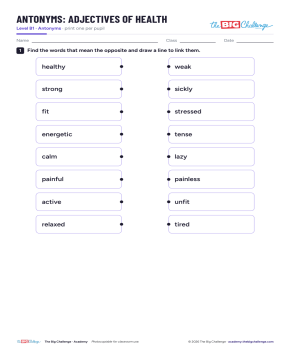
Adjectives of Health
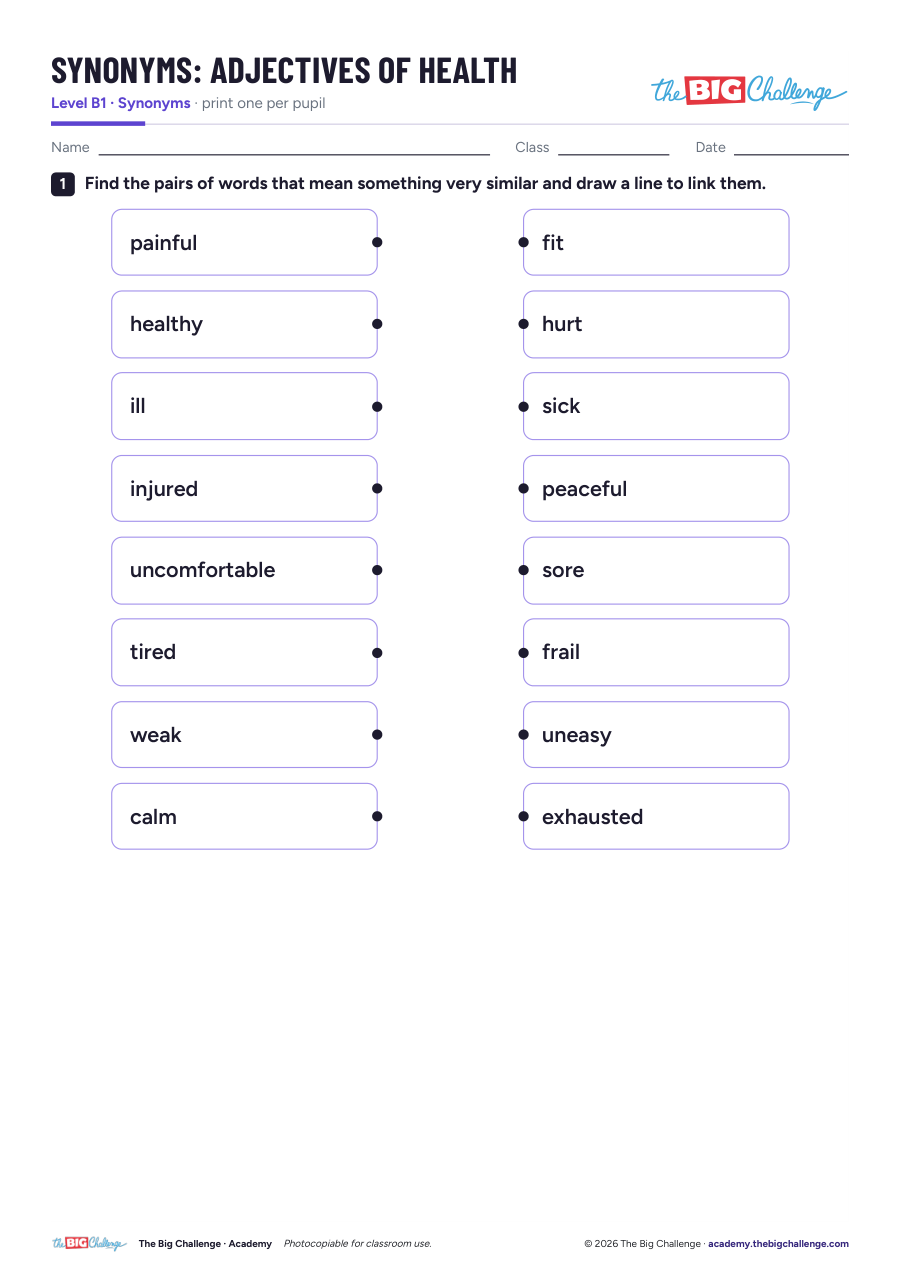
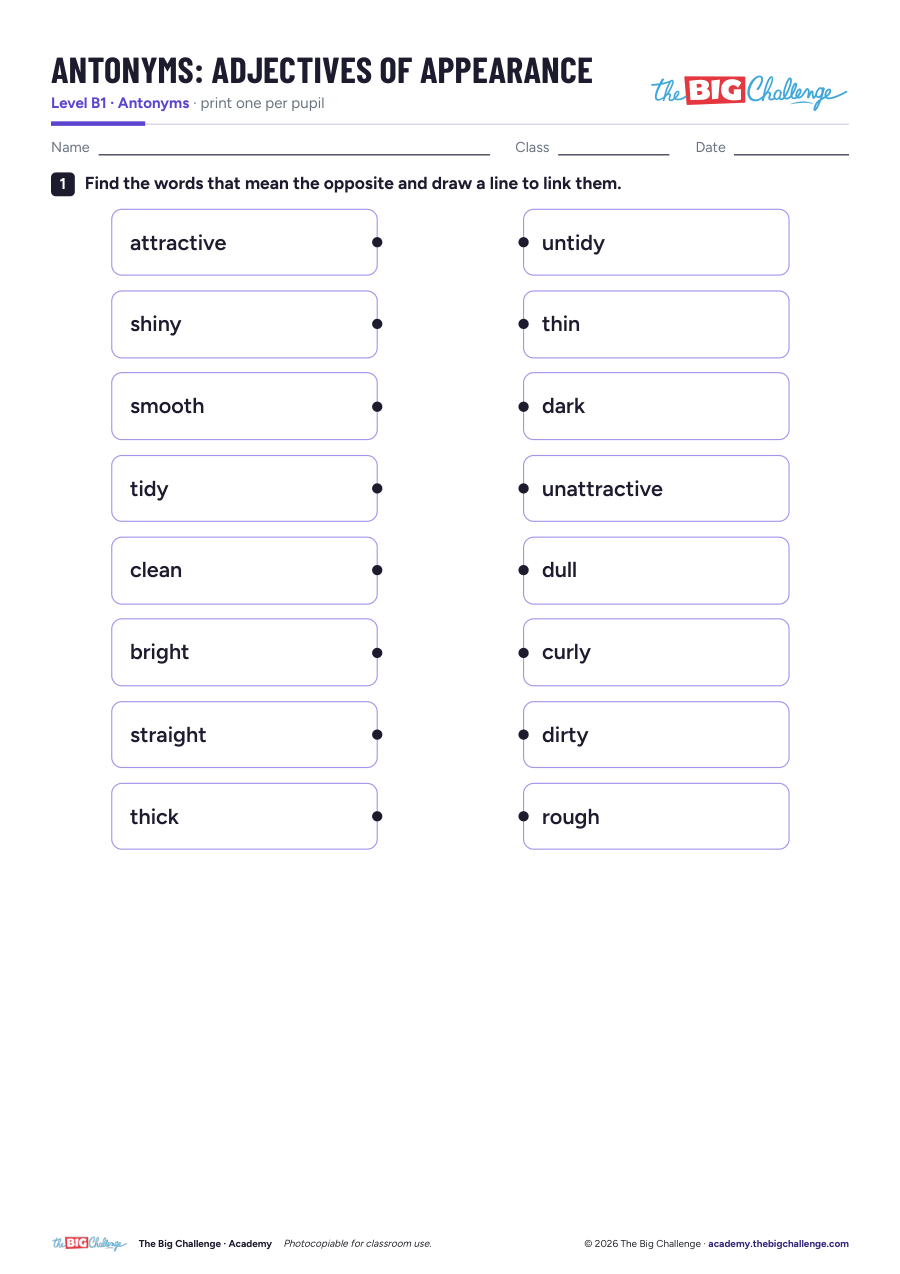
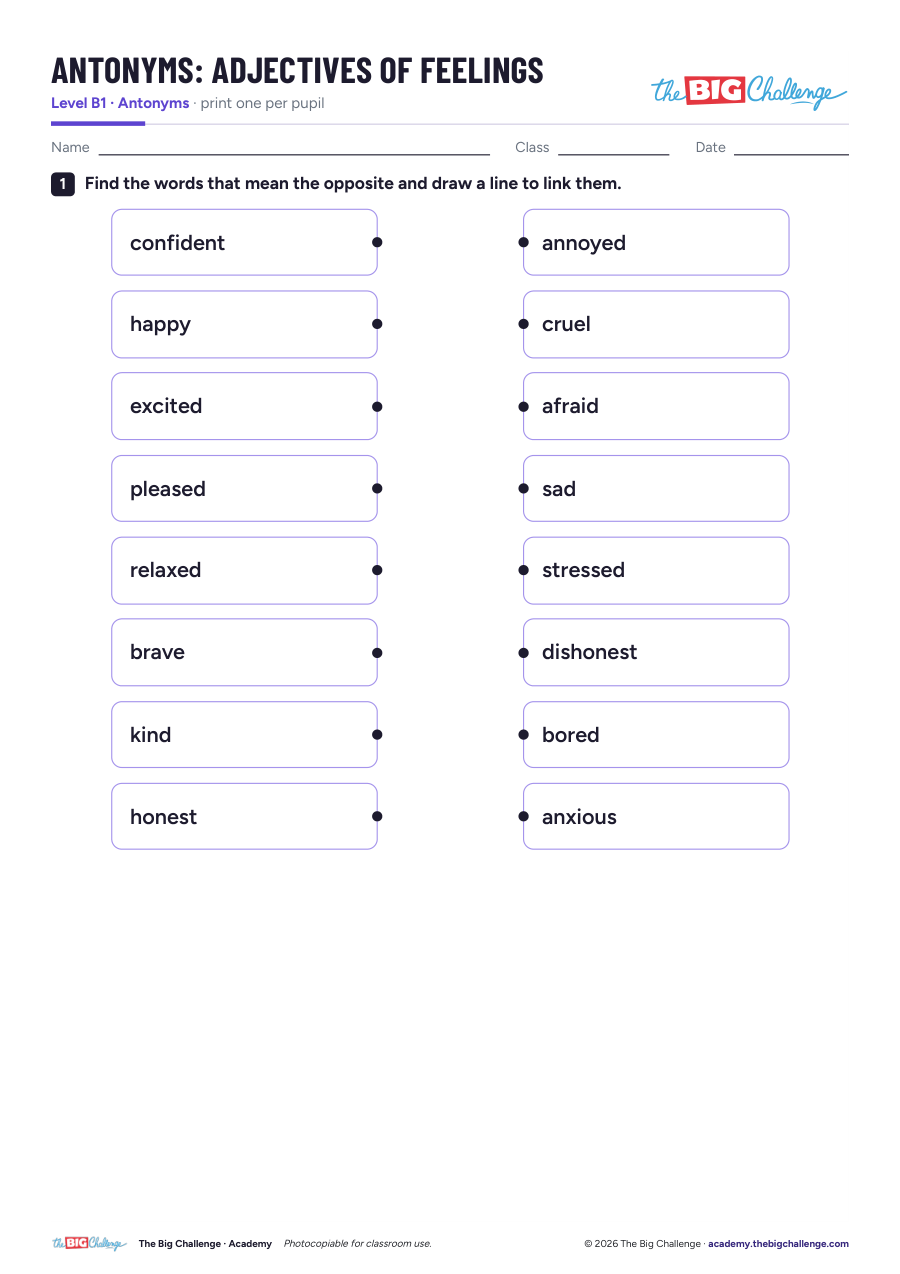
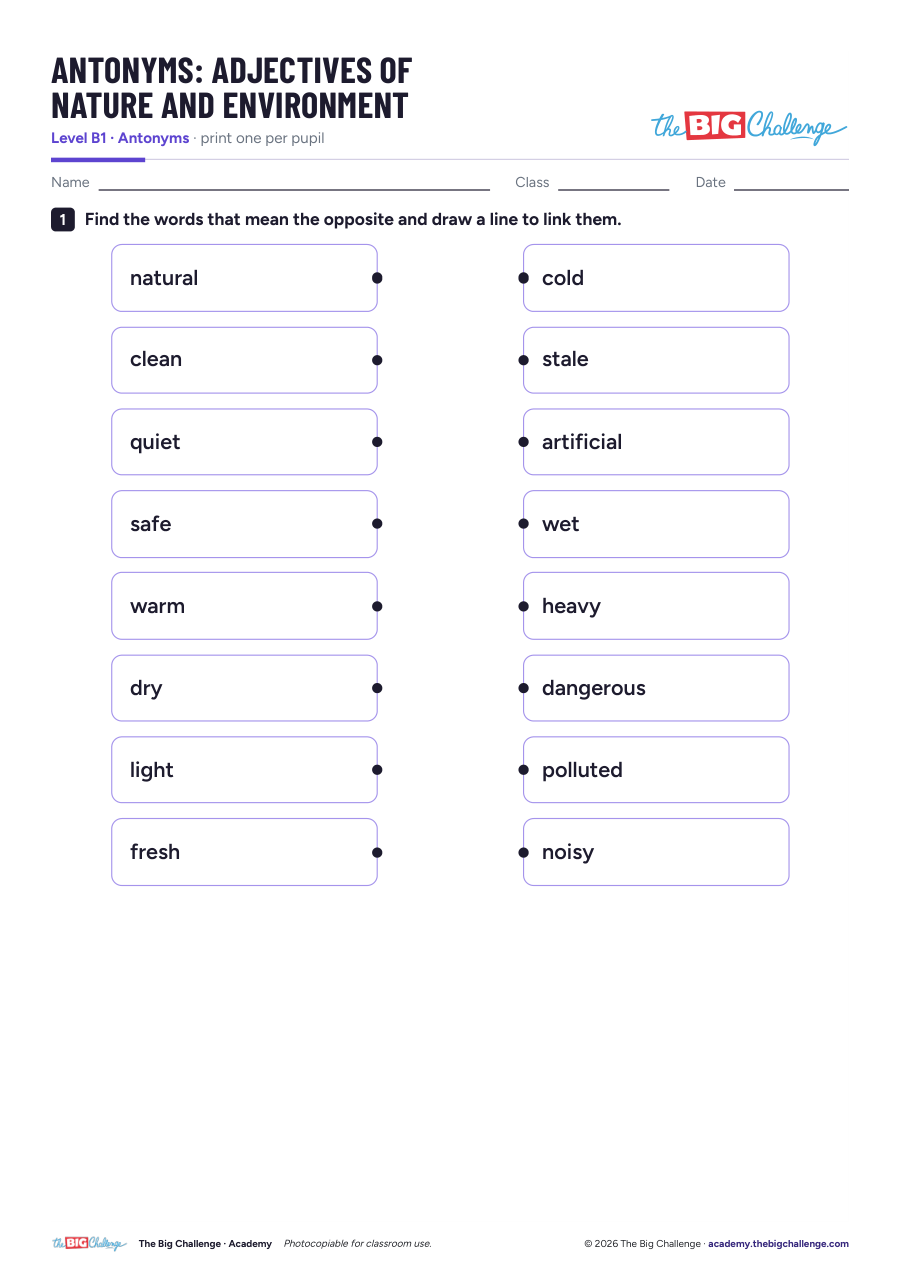
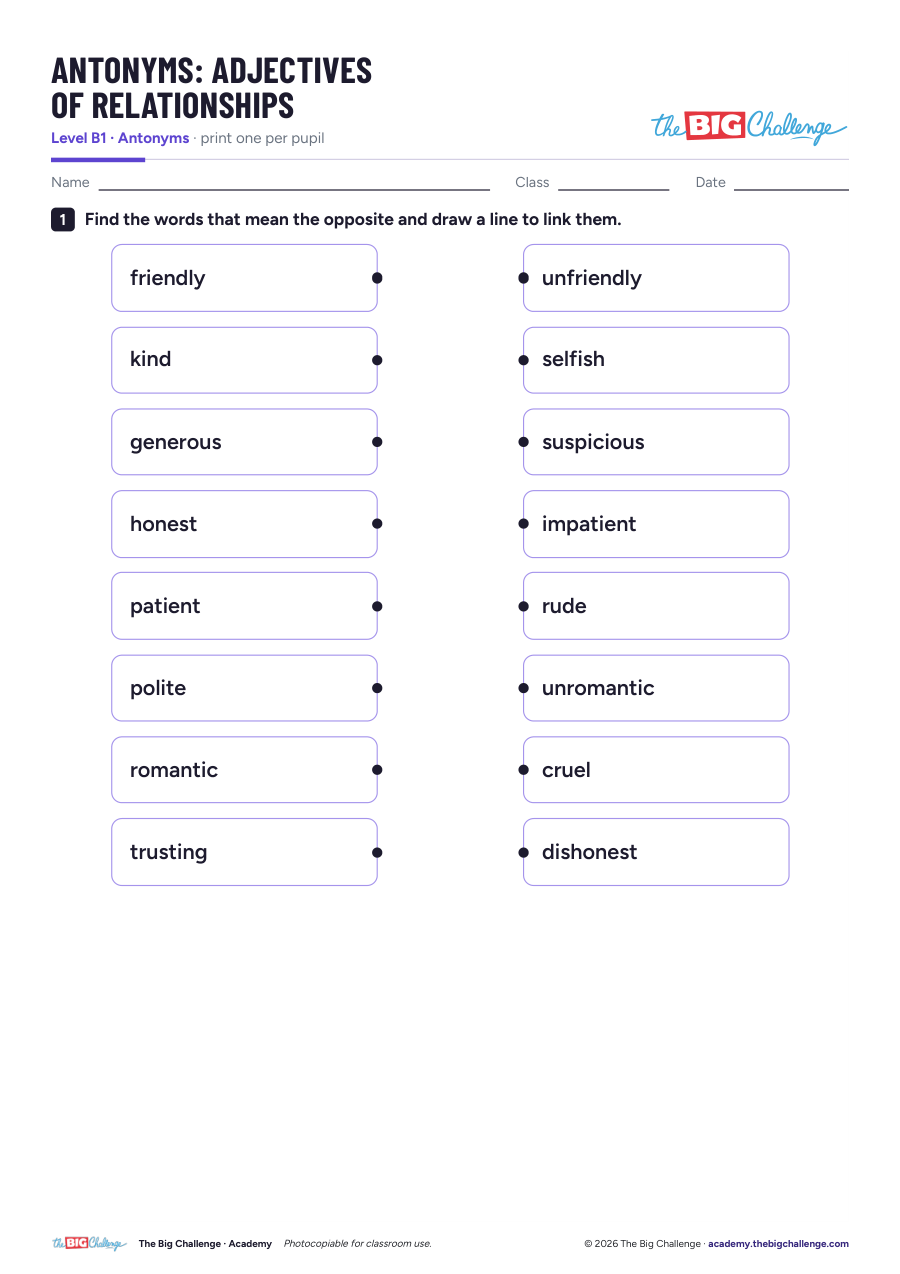
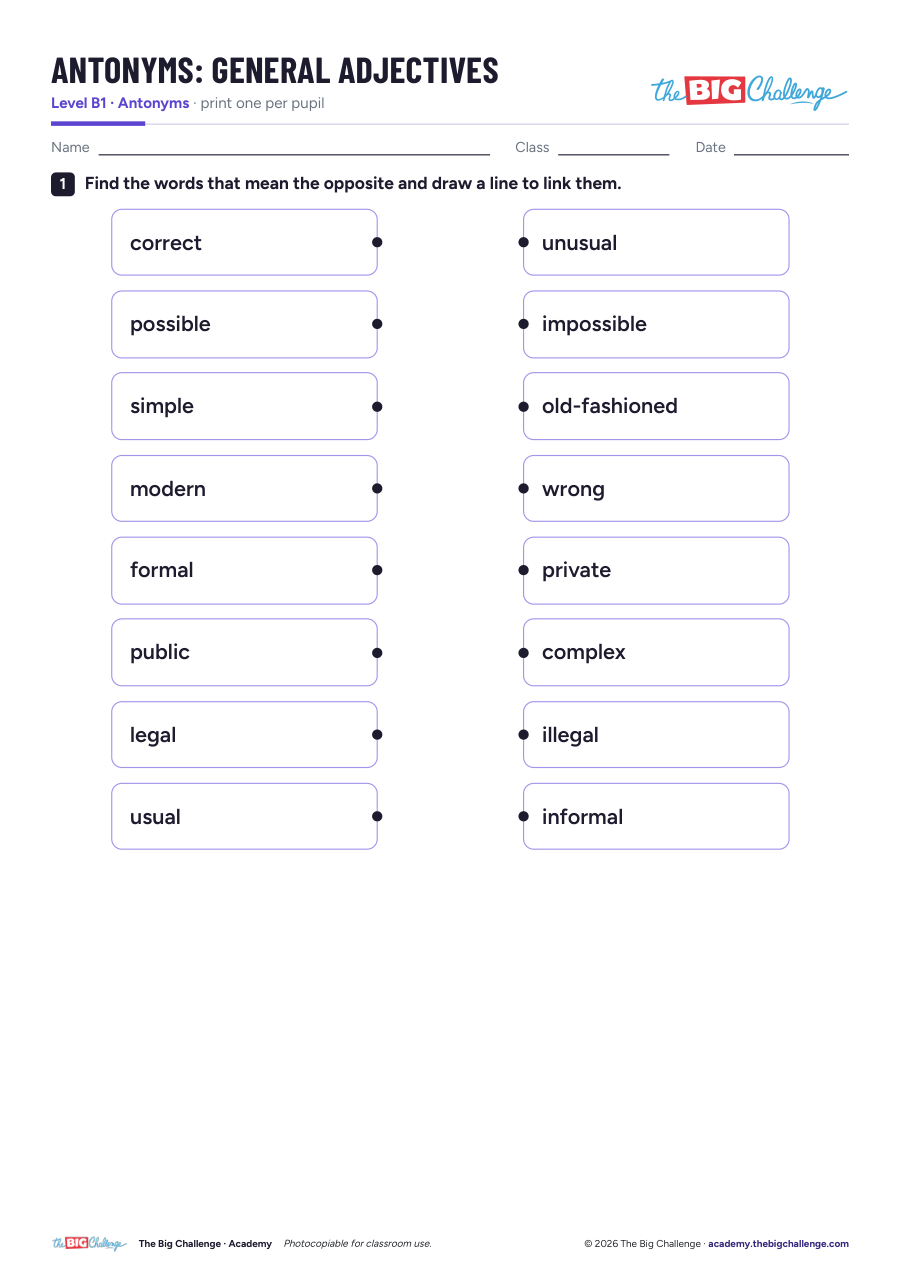
Exclusive ContentA printable B1 pairing worksheet on adjectives of health: 8 words in each of two columns, to be joined to the word that means the opposite. Recognition practice that works both on the day the words are introduced and as later revision, in about 25 minutes.
Your Worksheet
Assess your students' knowledge with this ready-to-use worksheet, designed to reinforce grammar and vocabulary points.
This resource is available for free. Simply create an account or log in to access it immediately.
Pedagogical Guide
Resource Objective & Content
The objective is to consolidate and expand students' vocabulary for describing health and well-being by identifying and associating antonymous (opposite) adjectives.
The document is an exercise titled "Antonyms Game" on the theme "Adjectives of Health". Students must connect eight pairs of words with opposite meanings. The vocabulary covers different aspects of physical and mental condition: general health (healthy/sickly, fit/unfit), strength (strong/weak), energy (energetic/tired, active/lazy), sensation (painful/painless), and mental state (calm/stressed, relaxed/tense).
Suggested Procedure
Before the activity (~5 min): HOW DO YOU FEEL?
-
Ask students to describe how they feel in contrasting situations: "How do you feel before the holidays? And during exams?". This will naturally introduce pairs of opposites like energetic and tired.
During the activity (~5-10 min): FIND THE OPPOSITES
-
Distribute the worksheet. Emphasize the instruction: find the opposite (the opposite).
-
Let students, alone or in pairs, connect the antonym pairs.
-
Lead a collective correction by asking students to mime certain states to check comprehension (ex: showing muscles for strong, yawning for tired).
After the activity (~10 min): GIVE ADVICE
-
Present a mini-scenario on the board: "Your friend feels stressed and tired. What is your advice?".
-
Students must give advice using the positive antonyms from the worksheet. For example: "You should be more active to feel energetic. Try to be calm and relaxed.".
Adaptations
-
To simplify: Before the exercise, create two columns on the board: "Feeling Good" and "Feeling Bad". Group all the adjectives from the worksheet with the help of the class. This will make associating the opposites much easier.
-
To extend: Ask students to write a short paragraph of advice for a friend who wants to improve their health, using at least three pairs of antonyms to describe the "before" and "after" situation.